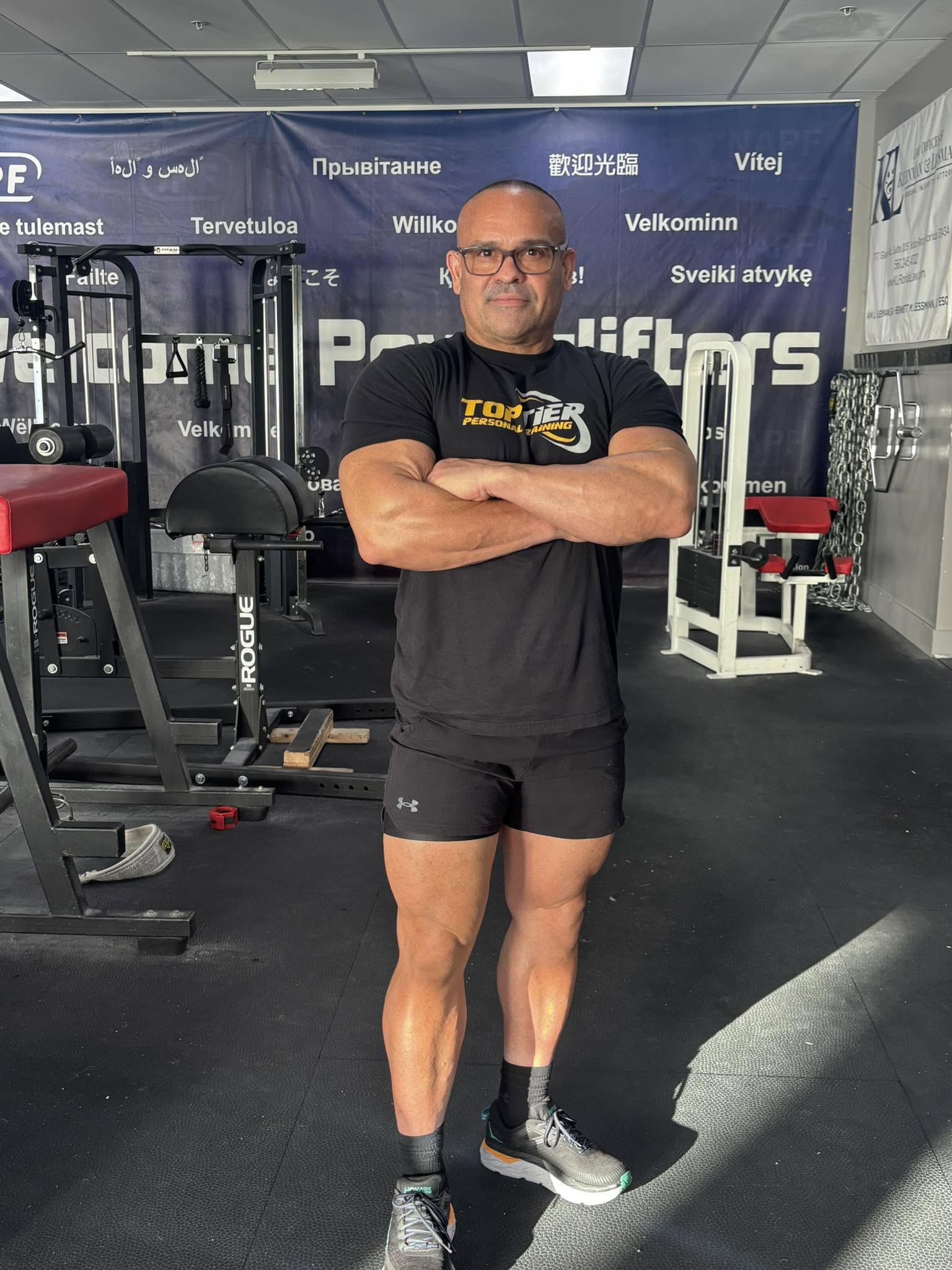
Knee pain is one of the most common complaints I hear as we get older. Many adults assume knee discomfort is simply a normal part of aging, but in many cases the issue is not the knee itself—it’s the muscles and movement patterns around it.
The knee is a hinge joint designed to bend and straighten efficiently. Unlike the hip, which is built for mobility, or the ankle, which absorbs ground forces, the knee functions best when it receives support and stability from the muscles above and below it.
When those supporting muscles weaken or become imbalanced, the knee often takes on more stress than it was designed to handle.
Understanding how to strengthen and support the knee can make a significant difference in maintaining mobility, confidence, and independence.
Why Knee Strength Matters
Healthy knees rely on the cooperation of several muscle groups:
- Quadriceps (front of the thigh) help extend the knee and stabilize the kneecap.
- Hamstrings (back of the thigh) control knee bending and protect ligaments.
- Glutes and Abductors stabilize the hips and control the alignment of the legs.
- Adductors (inner thighs) assist with knee tracking and balance.
- Core muscles support posture and weight distribution.
When these muscles work together, they absorb forces that would otherwise place strain on the knee joint itself.
Stronger muscles surrounding the knee can help:
- Improve joint stability and control
- Reduce strain on ligaments and tendons
- Improve balance and coordination
- Support daily movements such as walking, climbing stairs, and standing up
- Reduce the risk of both acute injuries and long-term overuse conditions
The Importance of Movement Quality
Many knee problems are not caused by weakness alone, but by how the body moves.
For example, limited hip mobility or weak glutes can cause the knee to collapse inward (knee valgus) during activities like squatting or climbing stairs. Over time, this repeated stress may contribute to discomfort or injury.
Corrective exercise focuses on improving movement patterns first, allowing the body to distribute forces more evenly across the joints by properly engaging muscles.
When movement mechanics improve, the knee no longer has to compensate for weaknesses elsewhere in the body.
Exercises That Support Knee Health
Several exercises are commonly used to strengthen the muscles that support the knee. These movements focus on building strength in the quadriceps, hamstrings, and hips while improving stability and coordination.
Some effective examples include:
Wall Sits
Wall sits strengthen the quadriceps and the tendons surrounding the kneecap while minimizing joint movement. Because the exercise is performed against a wall, it allows individuals to build strength without excessive strain on the knee. Start with your back higher up on the wall and knees in a 45 degree angle and slowly work yourself down “over time” into a 90 degree wall sit.
Hamstring Curls
The hamstrings play an important role in stabilizing the knee joint. Strengthening these muscles helps reduce stress on ligaments and improves control during movements such as walking, squatting, and climbing stairs.
Hip Bridges
The glutes are one of the most important muscle groups for knee health. Hip bridges strengthen the gluteus maximus, which helps stabilize the hips and prevents excessive stress from traveling down to the knees.
Clam Shells/ Abduction
Clam shells target the gluteus medius and minimus, muscles that help control the alignment of the legs. When these muscles are weak, the knee may collapse inward during movement, increasing joint strain.
Step-Ups
Step-ups help develop strength and coordination while reinforcing proper movement mechanics. Because they mimic real-life movements like climbing stairs, they help improve functional knee stability.
Leg Extensions
Leg extensions strengthen the quadriceps, which help stabilize the kneecap and support knee extension.
Romanian Deadlifts
This movement strengthens the posterior chain—the glutes, hamstrings, and lower back—which all contribute to knee stability and proper load distribution. Caution: this exercise is more advanced not necessarily for beginners.
Adductor Training
The inner thigh muscles assist with controlling leg alignment and help maintain proper knee tracking during movement.
The Bigger Picture: Building Knee Resilience
While exercises can help strengthen the muscles surrounding the knee, long-term knee health comes from a broader approach that includes:
- Maintaining healthy movement patterns
- Building strength gradually and consistently
- Improving mobility in the hips and ankles
- Developing balance and coordination
- Staying physically active over time
Strong knees are rarely built through a single exercise. Instead, they develop through consistent movement and balanced strength throughout the entire lower body.
PERFORMANCE- AESTHETICS- LONGEVITY
Disclaimer:
The information provided on this blog is intended for general informational and educational purposes only and is not a substitute for professional medical advice, diagnosis, or treatment. While I am a certified personal trainer, I am not a licensed healthcare provider and cannot diagnose or treat medical conditions. Always consult with your physician or a qualified health professional before beginning any new exercise, nutrition, or wellness program. Use of the information contained on this site is at your own risk.